Accessibility shouldn’t be treated as an optional line item on a hiring checklist. It’s the foundation of a workplace where people can do their best work, feel supported and stay long-term.
When companies overlook accessibility, employees often spend valuable energy navigating barriers instead of contributing their skills, ideas and expertise. Teams lose out on perspectives that could make their work stronger, more thoughtful and more innovative. Disabled people also represent one of the largest marginalized communities in the world—and it’s a community anyone can become part of at any point in their life, whether permanently, temporarily or unexpectedly.
Becoming more accessible doesn’t require rebuilding your company from the ground up. It requires care, curiosity and a willingness to listen. The goal isn’t to perform inclusion, but to build environments where people can thrive.
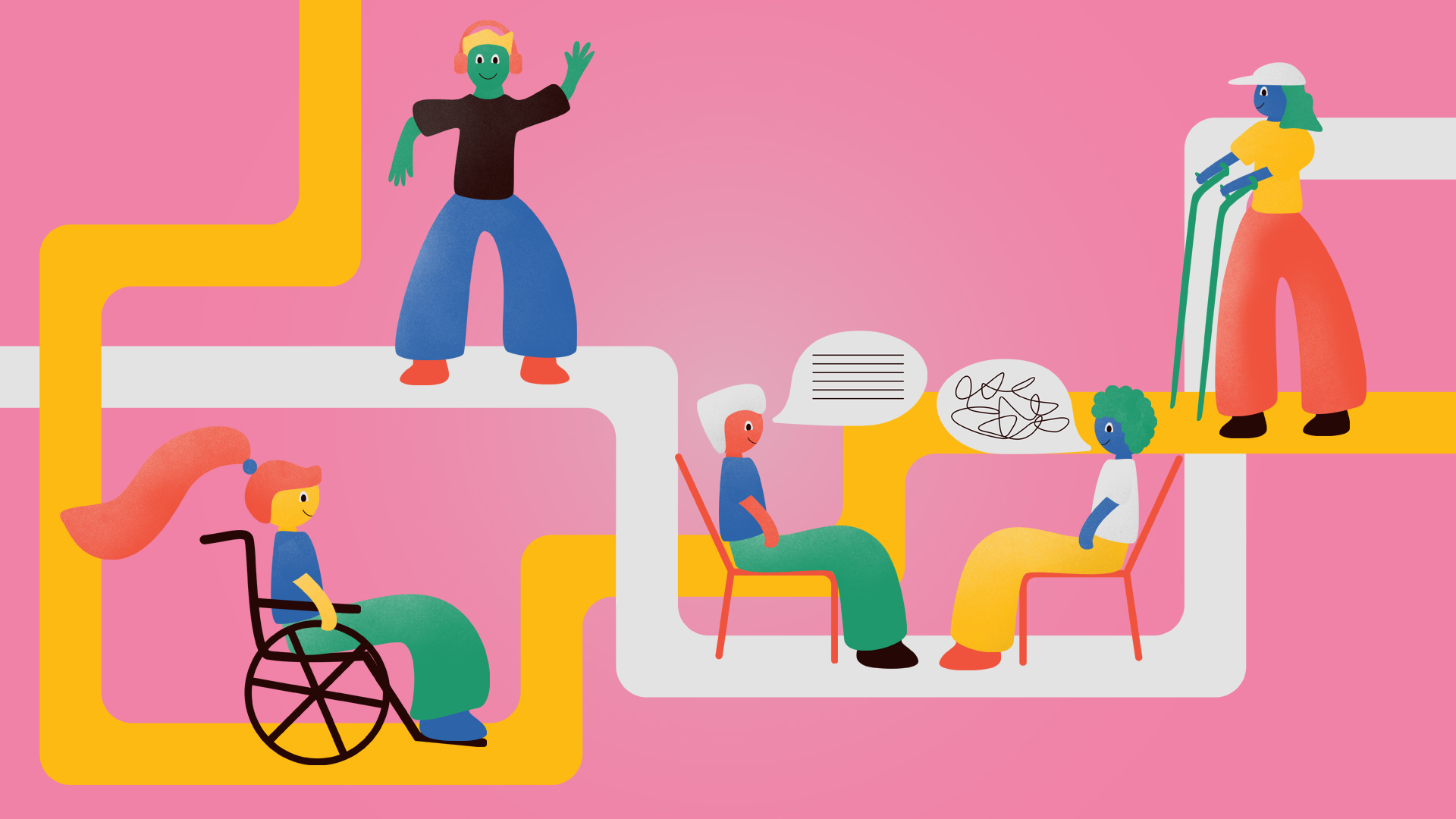
AccessAbility Blog Illustration_1920x1080
Inclusive Onboarding
An inclusive onboarding process helps employees feel supported from day one instead of forcing them to immediately advocate for their needs. At UpHouse, this can look like a “getting to know you” package where employees can share communication preferences, accessibility needs, working styles and sensory or allergy considerations in a low-pressure way.
Building accessibility into onboarding normalizes support instead of making it feel like a special request.
Offer Clarity
Clear communication is one of the simplest and most impactful accessibility practices a workplace can adopt. Expectations, deadlines and feedback should never feel vague or hidden behind assumptions. Ambiguity creates unnecessary stress, especially for neurodivergent employees who may process information differently.
Providing written follow-ups after meetings, giving direct feedback and outlining priorities clearly helps employees spend less time decoding expectations and more time doing meaningful work.
Flexible Dress Code
Dress codes often create barriers that have little to do with professionalism or job performance. Sensory sensitivities, chronic pain, mobility devices, gender expression and medical needs can all affect what someone is comfortable wearing at work.
A flexible dress code allows employees to prioritize comfort, safety and self-expression while still maintaining standards appropriate for the role.
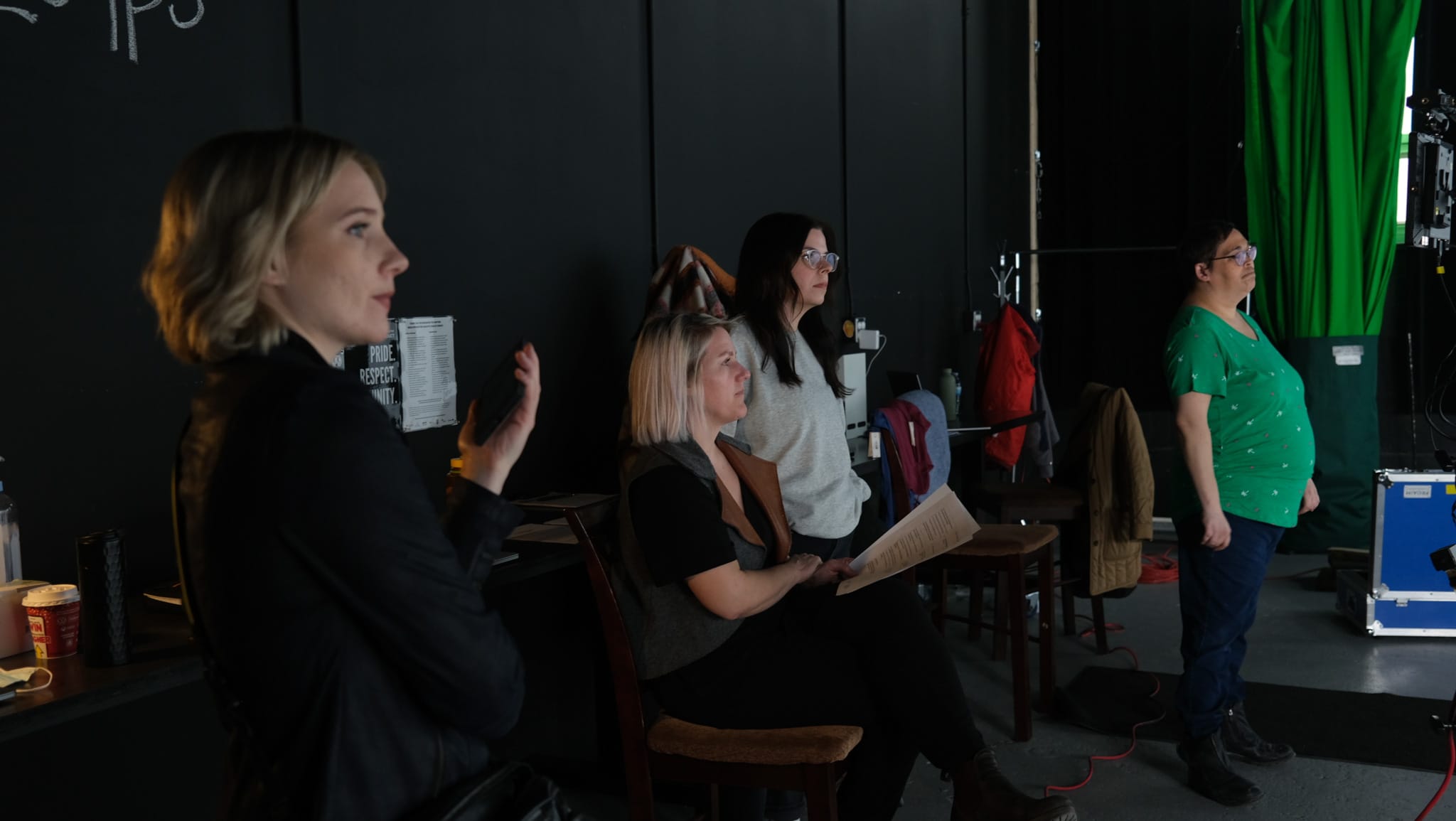
Barrier Town
Hybrid Work Models
Hybrid and flexible work models can be transformative for disabled employees. Commuting, rigid schedules and physically demanding office environments can create barriers that make work unnecessarily exhausting or inaccessible.
Flexibility allows people to work in ways that support their health, focus and energy levels. For some employees, remote work may be the difference between participating in the workforce or not.
Consistent Sensory-Friendly Hours
While some of us love blasting the newest Harry Styles album in-office as soon as its released, lively office spaces can become overstimulating for some employees. Sensory-friendly hours create predictable periods where noise, interruptions and environmental stimulation are intentionally reduced. That might mean limiting unnecessary meetings, lowering music volumes or encouraging quieter collaboration during certain times of day.
At UpHouse, our sensory-friendly hours take place on Tuesday and Thursday mornings, helping employees manage energy levels more sustainably throughout the week.
Quiet Spaces
Not every employee works best in open, high-energy environments. Quiet spaces give people somewhere to decompress, focus or regulate without judgment. These areas don’t need to be elaborate. A low-stimulation room with minimal noise and softer lighting can make a significant difference.
Importantly, quiet spaces should be normalized rather than treated as something employees need permission to use.
Communicate Policy Adaptations Clearly and Tactfully
Workplace changes tied to accessibility should be communicated thoughtfully and without framing adjustments as inconveniences. For example, implementing a scent-free policy should focus on collective care and health—not on singling out individuals or debating whether adjustments are necessary.
Clear, respectful messaging reinforces that inclusion is a shared responsibility.

Workplace Supports
Support systems shouldn’t begin and end with HR paperwork. Accessible workplaces invest in resources that help employees navigate challenges proactively. That can include career counsellors, mental health supports, mentorship opportunities or designated accessibility contacts employees can approach safely.
The goal is to create systems where people don’t have to reach a crisis point before receiving support. The support should be baked in throughout company processes!
Valuing Perspectives and Recognizing Talents
Disabled employees bring valuable perspectives, problem-solving skills and lived experiences that strengthen organizations. Too often, workplaces focus only on required adjustments while overlooking the valuable expertise disabled employees contribute.
Inclusive workplaces create opportunities for leadership, listen to feedback and include disabled employees in decisions that shape workplace culture. As a marketing agency that has worked on disability advocacy campaigns, we know firsthand that including creators with lived experience creates stronger, more grounded work.
Celebration
Representation should never stop at hiring. Inclusive workplaces actively celebrate disabled and neurodiverse communities year-round—not just during awareness months. That means supporting advocacy work, amplifying community voices and making it clear that accessibility and disability justice are values your organization genuinely stands behind.
Celebration should also happen on an individual level. Employees deserve recognition in ways that feel meaningful to them personally.
Non-Mandatory Company Social Events
Workplace culture shouldn’t depend on mandatory socializing. Many employees experience networking events, after-hours gatherings or large group activities differently due to disability, neurodivergence, caregiving responsibilities or social anxiety.
Making social events optional allows employees to engage in ways that feel comfortable and sustainable. Digital spaces like themed Slack or Teams channels can also help foster connection without requiring in-person participation.
Accessibility Benefits Everyone
One of the biggest misconceptions about accessibility is that it only benefits disabled employees. In reality, many workplace practices designed to improve accessibility end up helping everyone. Flexible scheduling can support caregivers and employees managing responsibilities outside of work. Clear communication reduces confusion across teams. Remote work options can improve work-life balance in many different situations.
At its core, accessibility is about removing unnecessary barriers so employees can fully participate and succeed in their work. Without proper support, disabled employees often spend valuable time and energy navigating environments that were never designed with them in mind.
When organizations commit to accessibility, the benefits extend across the workplace and beyond. Employees are generally better able to focus, collaborate and contribute in environments where people feel supported and respected. Over time, that commitment strengthens morale, retention and trust in the organization itself.