Untitled design
Happy Pride, readers!
I'm fresh off listening to this episode of It's No Fluke, where I was introduced to the SeeMe Index, a tool that uses AI to measure the inclusivity of a brand and how that powers its growth.
The results are in and the data proves what so many of us from underrecognized communities already intrinsically know: "brands rated as more inclusive are growing 1.8x faster than their peers, even as major gaps in representation continue to persist across the industry."
People want to be seen, heard and represented. They want to know your product or service can service them. They want relatability.
Former Google exec Asha Shivaji launched the index, determined to show the business case for inclusivity—whatever it took for brands to jump on board—even if it was just to outperform your competitors.
What struck me was the way inclusive advertising has much longer-term effects on brand loyalty and affinity—proving the case for a committed change from the inside out.
After collecting five years of data that spanned 58 countries and 300-plus brands, UN Women's Unstereotype Alliance research found that "more inclusive advertising drove short-term sales by 3%, long-term sales by 16%, but critically, loyalty by 15%."
And we've all seen what happens to brand loyalty when you renounce your commitment to inclusivity—like the boycotting of Target that plummeted store sales and its reputation.
Inclusive marketing often means expanding your horizons to include whoever you're leaving out, and who you could better serve. Done correctly, it's usually tied to product or service and marketing enhancements that enhance everyone's experience of your brand.
On a personal level, I think it's why so many people feel deeply connected to UpHouse and the work we're doing—and it's why businesses value the work we do, too—always pushing for better representation, and therefore, a better impression for your business.
While we are on a constant journey to improve, I wanted to reflect on the 5 times I was most proud to work for an inclusive marketing agency so far.
- DrinkSense Summer Campaign (2024)—We casted three people of colour as leads who happened to be real friends. They remarked that they've never been on set together, as usually only one of them gets the opportunity alongside a less diverse cast.
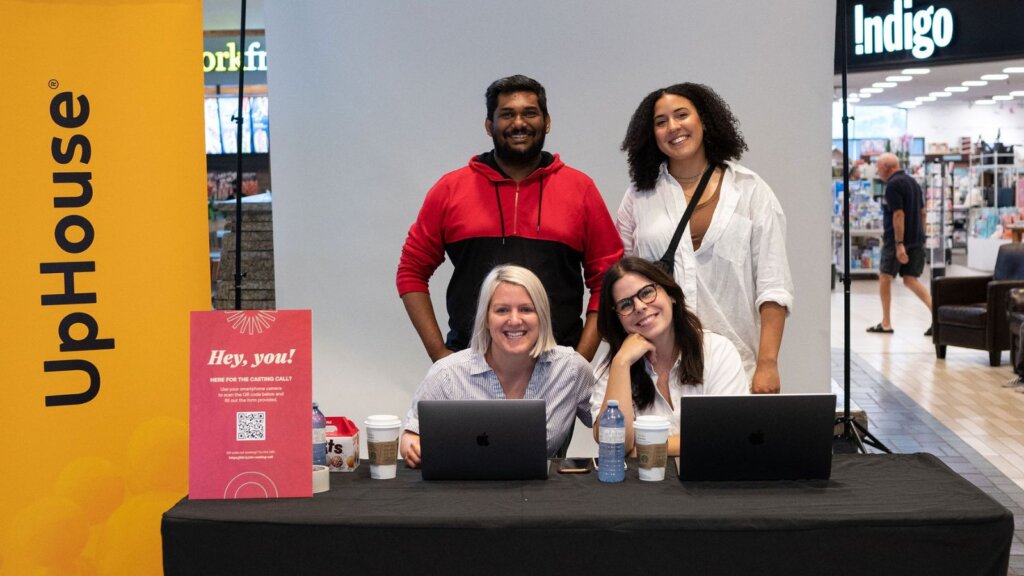
- St. Vital Centre Campaign (2023)—It took someone else pointing this out for us, but it's rare to have nearly a 100% women-run shoot behind the camera and on the production and creative of a campaign of this size. We took a photo to commemorate the moment that is now cemented in my mind, suddenly recognizing its exceptionality.
- CQCC rebrand—While having the opportunity to work directly with the rename for the Canadian Queer Chamber of Commerce, we were able to advocate for the use of the term "queer" through deep research as well as from firsthand experience. Leading with lived experience, we were able to validate that "queer" was the most common way their audiences self-identified, supporting a shift to the unified term.
- CQCC campaign (2025)—While the reach for French-first ads are often minimized, our French-language assets outperformed the rest of CQCC's national campaign assets, likely standing out to our Québec and Nova Scotian audience reacting to being served in their preferred language.
- Cheese alert: every day! There are so many ways our team shows up for each other every day, stands up for underserved voices and leads with deep empathy and understanding.
These are the gifts of being a queer-led agency—our perspective—for not only our own communities, but also, anyone who's missing from the conversation. While she says it partly in jest, the content creator Coach Jackie often talks about how "kissing her girlfriend is the least gay thing about her." It's really the lifestyle, perspective and sense of community it brings to your life that she identifies with the most. We couldn't have said it any better, Coach! Luckily, anyone who works with us gets to benefit from this expansive perspective, too.
—Brenlee Coates, Vice President Creative