Something shifted in 2024. Brands that had spent years building visible commitments to DEI (Diversity, Equity and Inclusion) quietly began dismantling them.
Starting with legal pressure that followed a 2023 US Supreme Court ruling against race-conscious admissions, conservative activist groups began challenging corporate DEI programs on similar grounds. Then, with the political environment, DEI became a prominent culture war target in the 2024 US election cycle. Republican-led states passed legislation restricting DEI programs, and activist investors began filing shareholder resolutions against diversity initiatives at major corporations.
The Bud Light moment made everyone more nervous. When the brand faced an organized conservative boycott after partnering with a trans creator in 2023, and its parent company Anheuser-Busch lost billions in market value, not because of the partnership, but because of how badly the backlash was handled, other brands took note.
By early 2025, the retreat had become a stampede. Executive orders targeted federal DEI programs. Ford, Walmart, Toyota and dozens of other major corporations publicly scaled back or eliminated DEI commitments entirely. Target pulled Pride merchandise from its shelves before June even started. Major corporations scrubbed diversity language from their annual reports.
pride-in-practice-event
What This Means for Pride Marketing
At UpHouse, we watched this happen from a particular vantage point. We watched as a B-Corp certified agency, a certified diverse supplier with the Canadian Queer Chamber of Commerce and a team that has spent years doing work that genuinely centres 2SLGBTQ+ communities, not just in June, but year-round. We also had something most agencies didn't: data.
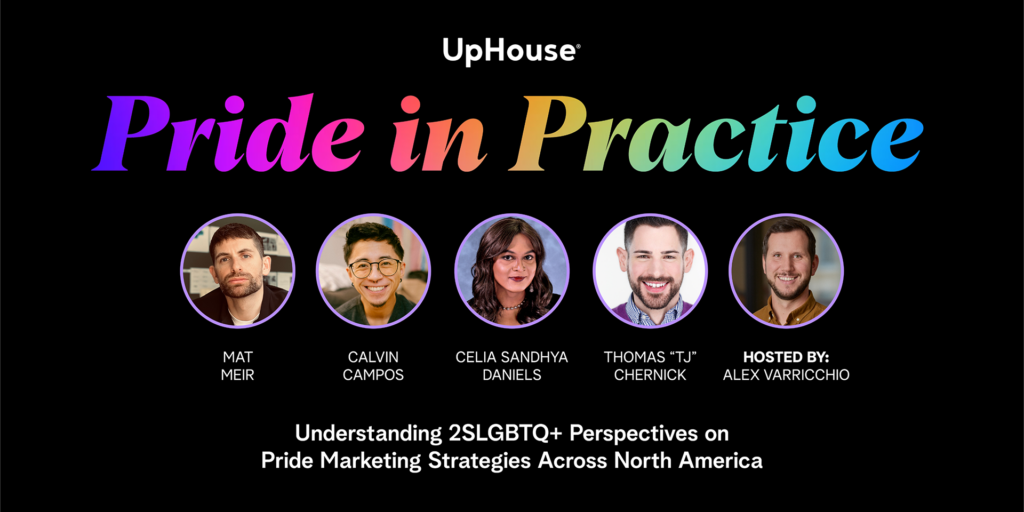
In the fall of 2023, following that year's Pride Season, we commissioned Pride in Practice, a survey of 500 2SLGBTQ+ individuals across Canada and the United States. Critically, we didn't conduct the research ourselves.
We partnered with Mat Meir Consulting, a Queer-owned-and-operated research firm, to gather and interpret the findings. "Nothing about us without us" isn't just a philosophy we cite. It's a principle that guided how the research was conducted.
We wanted to understand how the community actually experienced brand behaviour during Pride, not how brands hoped they were being perceived.
What we found was more nuanced, more strategically significant and frankly more urgent than we expected. And given what has happened since, it feels more relevant now than the day we published it.
The Finding Most Brands Missed
Let's start with the number that surprised us most.
When we asked respondents whether they felt brand Pride marketing was actually addressing real 2SLGBTQ+ community issues, the split was almost perfectly even: 51% said yes, 49% said no.
This revealed a nuanced complexity in the story and reflected to us a community that is genuinely divided—some see progress, while others see exploitation.
A near-even split means the same campaign, from the same brand, will land as genuine progress for half the room and as exploitation for the other half.
The criticism didn't have much to do with the pride campaign itself; it was about whether the organization had done enough real work in the eyes of the community.

Bubbles
Why Pride Marketing Falls Short—and What the Data Actually Says
Our respondents identified five consistent failure patterns in the Pride marketing they remembered from 2023. None of them are surprising in isolation. What’s striking is how consistently they cluster together and how directly they point to the same underlying problem.
-
Performative support (rainbow washing)
This was the dominant theme. Respondents used words like “superficial,” “hollow” and “seasonal” to describe the majority of what they saw. One transgender respondent from Canada put it plainly: “They want to sell merch, brand our struggles, claim our struggles, then forget about us the rest of the year.” This is the definition of rainbow washing, and the community has become exceptionally good at identifying it.
If you’re unsure whether your organization is ready to post about Pride at all, we’ve put together a practical guide on how to show up thoughtfully.
-
Seasonal commitment
Brand support that appears in June and vanishes by July 1st was a near-universal frustration across every demographic in our study. The critique wasn’t emotionally reactive; it was logical and justified. If a brand genuinely supports 2SLGBTQ+ communities, what exactly changes on July 1st? The answer for most brands is the marketing budget allocation. And people notice that.
-
Celebration over advocacy
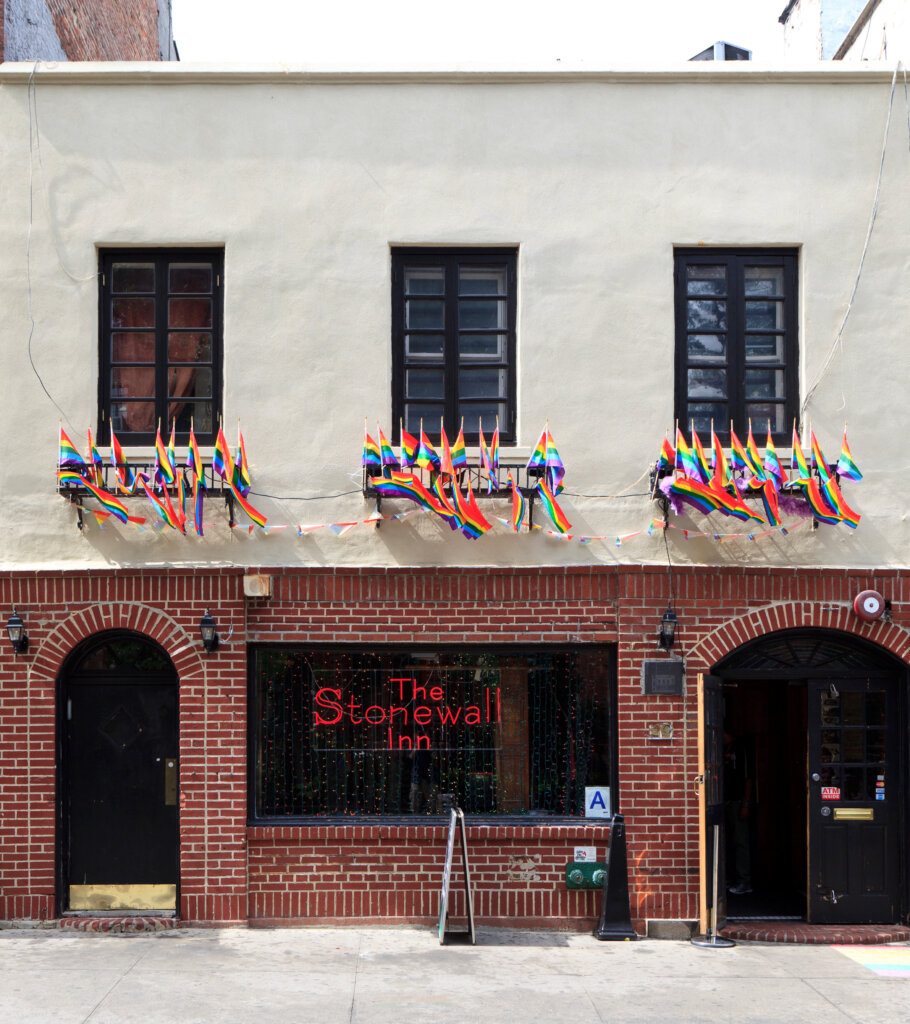
Pride was born in protest. The Stonewall Riots of 1969 were not a marketing opportunity; they were an act of resistance by people who had nothing left to lose. Our respondents were acutely aware of this history, and many felt brand campaigns reduce Pride to a party rather than engaging with the advocacy and community needs that remain urgent. As one cisgender lesbian respondent from Canada noted, “So much marketing around Pride Season is aimed at a ‘party’ aspect, when many of my friends and I tend to focus on the advocacy aspect or self-care during that month.”
-
Stereotypical or limited representation
Representation in Pride marketing still skews heavily toward cisgender, white, gay men, which is a fraction of the full spectrum of 2SLGBTQ+ identity. Bisexual people, who made up 26% of our sample and represent the largest single orientation group in the community, described feeling largely invisible. Asexual, pansexual, non-binary, Two-Spirit and gender-fluid identities were even less visible. The “rainbow” in rainbow washing often doesn’t even include the full rainbow.
-
Lack of intersectionality
The 2SLGBTQ+ community is not a monolith. It intersects with race, disability, class, neurodivergence, age and dozens of other dimensions of identity and lived experience. Campaigns that treat “queer” as a single, unified audience—with shared aesthetics, shared concerns and shared aspirations—fundamentally misunderstand who the community is and what it needs.

The Generational Layer Nobody Is Talking About
Here's where the data gets strategically interesting for anyone trying to build a campaign that actually lands.
Our research revealed meaningful generational differences in how Pride marketing was experienced, and they don't follow the patterns you'd expect.
Gen X (45-60) rated brand Pride marketing as most effective on average. This is the generation that came of age during the AIDS crisis, fought for rights that younger generations now take for granted and watched brand support go from zero to ubiquitous. For them, visibility—even imperfect visibility—represents genuine progress.
Baby Boomers (60+) rated it least effective, primarily due to a near-total lack of representation of older 2SLGBTQ+ individuals. This is a population that survived decades of active persecution, built the foundations of the modern queer rights movement and is now largely invisible in campaigns that claim to celebrate them.
Gen Z (18-29) was the most divided, which tracks with a generation that has grown up with Pride as a commercialized event and has both higher expectations for authenticity and greater skepticism about corporate motivations.
What does this mean practically? It means a single campaign optimized for one generational lens will actively alienate another. It means "inclusive" representation needs to include age. And it means the brands that understand this complexity will stand out dramatically in a landscape where most are still painting everything in the same rainbow palette.
The Brands That Broke Through and Why
Not all of the responses were negative. Our respondents clearly remembered brands that stood out positively, and the pattern in what worked is as instructive as what didn't.
Community involvement with substance: Absolut Vodka's longstanding partnerships with 2SLGBTQ+ organizations were cited positively, along with support from local groups like Winnipeg's Rainbow Resource Centre. The differentiator wasn't the visibility of the brand; it was the tangibility of the investment.
Genuine creativity: Oreo's Pride campaigns, the Skittles Artist Series (which literally gave up its iconic rainbow to the community) and Xbox's inclusive controller campaigns were remembered. These weren't just rainbow logos; they were ideas that required creative risk and genuine commitment to execute.
Consistent inclusive representation: CIBC, TD Bank, Nike and Apple were mentioned positively for representation that felt broad, thoughtful and not reducible to a single stereotype of what "queer" looks like.
The throughline in all of these? None of them felt accidental. They required organizational commitment that predated the campaign. You can't manufacture the impression of year-round investment in a June press release.

The Four Dimensions Brands Are Consistently Ignoring
Beyond the failure patterns, our research surfaced four areas where brands have an almost entirely open field because almost no one is operating here yet.
Political engagement and advocacy: Respondents wanted brands to take actual positions on legislation that affects 2SLGBTQ+ lives, not vague statements about "supporting all people," but genuine, named stances on named bills. This is uncomfortable for many brands. It is also exactly the kind of substantive commitment that separates genuine allies from performative ones. The Bud Light controversy is instructive here: the brand's failure was not that it partnered with a trans creator; it was that it buckled under pressure the moment that partnership became costly. Commitment that evaporates when tested was never commitment in the first place.
Mental health and generational support: The mental health needs of 2SLGBTQ+ youth, support for older community members, suicide prevention and access to affirming healthcare were cited as areas where brand investment could make a tangible difference. Almost none of the marketing our respondents recalled touched any of this.
Educational campaigns: The history of the 2SLGBTQ+ movement—Stonewall, the AIDS crisis, the legal battles for recognition—is not widely understood even among people who consider themselves allies. Brands that invest in education rather than just celebration are doing something genuinely different.
True intersectionality: Campaigns should represent not just queer identity but the full intersection of queer identity with race, disability, neurodivergence and age. "Queer joy" is a phrase that appears in a lot of brand briefs right now—but authentic queer joy looks different depending on who you are, where you're from and what other parts of your identity you carry.

A Different Way to Think About This
The brands that will earn genuine trust from 2SLGBTQ+ communities are not the ones with the biggest Pride campaign budgets; they’re the ones who see Pride as a proof point of something that was already true, not just a strategy activated in June. That distinction matters now more than ever.
At a moment when many brands are retreating from DEI commitments because the cultural climate feels risky, the brands that hold the line are building something that can’t be bought: credibility. The community has seen retreats before. It remembers who stayed.
Here’s a practical framework for any brand reassessing its approach:
- Start with the internal audit. What are your organization’s actual policies around 2SLGBTQ+ inclusion? How many openly queer people are in leadership? What do your benefits look like? What is your public stance on legislation that affects the community? If the answers to these questions are uncomfortable, no campaign will fix that. The campaign is downstream of the organization.
- Commit to a year-round presence. This doesn’t require a constant marketing campaign. It requires consistent, substantive investment, whether that’s financial contributions to community organizations, partnerships with 2SLGBTQ+ suppliers, amplifying queer voices in your platforms or taking public positions when it matters.
- Pursue specificity over scale. Broad, generic Pride campaigns land as broad and generic. Campaigns that go deep on a specific dimension of 2SLGBTQ+ experience, whether that’s the needs of trans youth, the erasure of bisexual and asexual identity or the experiences of older queer people, will be remembered precisely because they went somewhere most brands don’t go.
- Accept that you will be imperfect. The community is not looking for perfection. The 51/49 split in our data tells us that. What it is looking for is genuine effort, transparency about where you fall short and commitment to doing better. The brands that earn trust aren’t the ones that got everything right the first time; they’re the ones who kept showing up.
What We Took Away
We did this research because we believe a good strategy requires honest data, especially when the subject is a community that has spent decades being used as a marketing vehicle without being genuinely served. Pride in Practice was our attempt to ask the community directly, without filtering the answer through the lens of what brands wanted to hear.
What we heard was not a condemnation of brand involvement in Pride; it was an invitation to do it better. The community wants brands to show up. It just wants them to show up as something more than a rainbow logo and a limited-edition product.
The research is ours, but the invitation is open to everyone.